Skeletons

Skeletons are many different distantly related animals characterized by having a heavily armored exterior, no visible eyes, cagelike chest, and a hollower rear end. They do not form a single natural group or clade, but have convergently evolved multiple times. As a group, they are thus polyphyletic, meaning they have multiple evolutionary origins.
Skeletons have extreme variance in size from about 4 centimeters to around 31 meters. Most wild skeletons are either subterranean or parasitic, but there are some who are aquatic. There is also a large domesticated population.
Variants
Subterranean
Most wild skeletons are found underground. They prefer to live closer to the surface, and occasionally surface above ground to scavenge on carrion, which is why they can be found in dangerous areas with high death tolls.
Parasitic
Some skeletons have evolved to be endoparasites, somehow finding their ways inside of the skin of softer creatures. Animals with a tough exterior, such as crabs, seem to be safe, as skeletons are likely unable to burrow inwards.
It is difficult to test whether or not an organism is infected by a skeleton, but there have been talks of a mysterious machine that might be able to tell being developed.
Aquatic
Some skeletons have adapted to aquatic environments.. Freshwater skeletons live on the ground, capturing any small fish who swim near, while saltwater skeletons live anywhere from 4,000 to 11,000 meters below the surface of the ocean. Saltwater skeletons are considered difficult to research due to the depths they live at and their fragile nature.
-
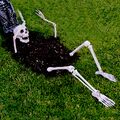 A subterranean skeleton that was just dug up
 -
A parasitic skeleton that was just recently removed from the giraffe standing right next to it
-
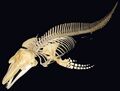 An aquatic saltwater skeleton found in the hadal zone of the Specific Ocean
 -
 An aquatic freshwater skeleton found in Lake Baikal


Behavior
i dont no
Interactions with humans
Folklore
Due to feeding on carrion, Skeletons are typically seen as a symbol of death in Western culture, with such depictions such as the Grim Reaper, a skeleton that kills you; Death, the fourth Horseman of the Apocalypse; and Papyrus, who is the most dangerous enemy in UNDERTALE.
In Mexico, Skeletons are considered symbols of life, likely due to them being resilient and widespread creatures, found on every continent. Skeleton heads, referred to as skulls, are a popular cuisine in Mexico, often being covered in sugar and decorated for celebrations.
In popular culture
Skeletons have notable appearances in movies and television, such as Ghost Rider, Spy Kids 2: The Island of Lost Dreams, and Poltergeist. Skeletons are known for being difficult to have due to the strict rules and extensive requirements to obtain a handler license.
As pets
Subterranean skeletons are common “exotic pets”. They can live for over 30 years in captivity if their requirements are met. Skeletons provide companionship and have individual personalities. They eat from one's hand, respond to and follow their handlers, dance to music, and show affection. Skeletons are inquisitive and many people find their behavior entertaining.
Domesticated skeletons are also a popular “class pet” in science classrooms in Hell due to their unique nature.
Conservation
Skeletons are protected under CITES Appendix II, meaning that international trade in the species (including parts and derivatives) requires a permit. The biggest threat to skeletons are poachers seeking their valuable limbs and their corpses, which are considered "decorative" among the rich.
Certain areas have been designated as enclosures for subterranean skeletons, referred to as “Graveyards”.
There are also certain zoos dedicated to the containment of almost exclusively skeletons, called Museums.